
With the panels printed, the simulator needed a proper home. I wanted it to look and feel like a regular desk the kids can use for homework when they’re not flying to the Moon.
Designing in Fusion
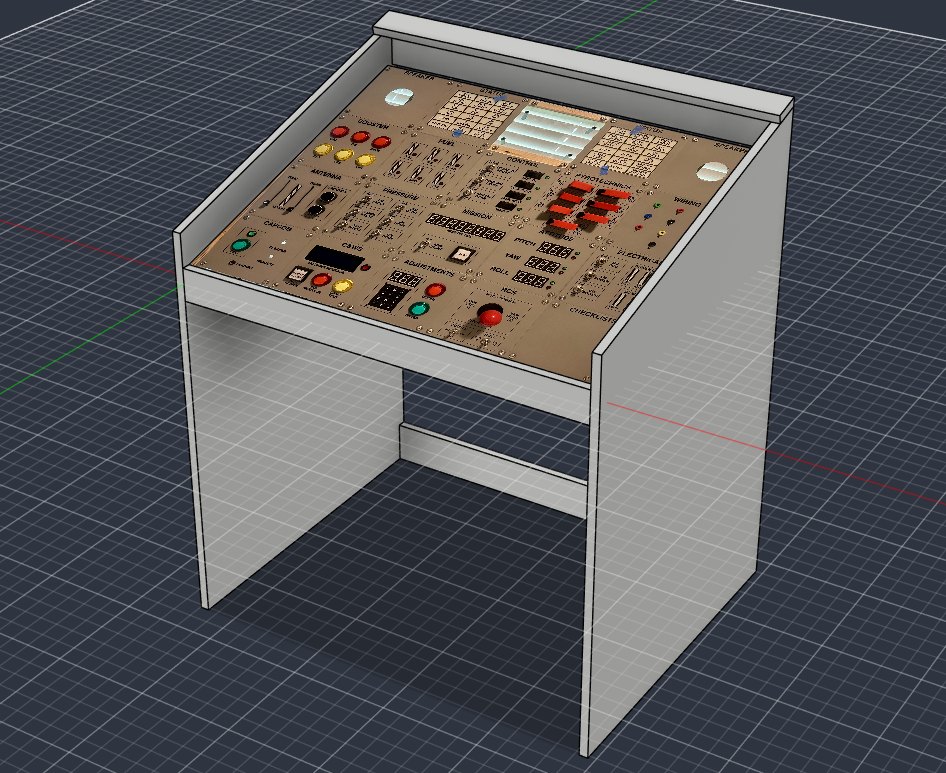
I started by drawing the desk in Autodesk Fusion. I modeled the full desk around the 60 cm × 75 cm control panel so I could check proportions, the angle of the panel, and how everything would fit together before buying any materials. I had to pay particular attention to the height of the controls on the panel itself so they didn’t hit the lid when it closed.
Building It
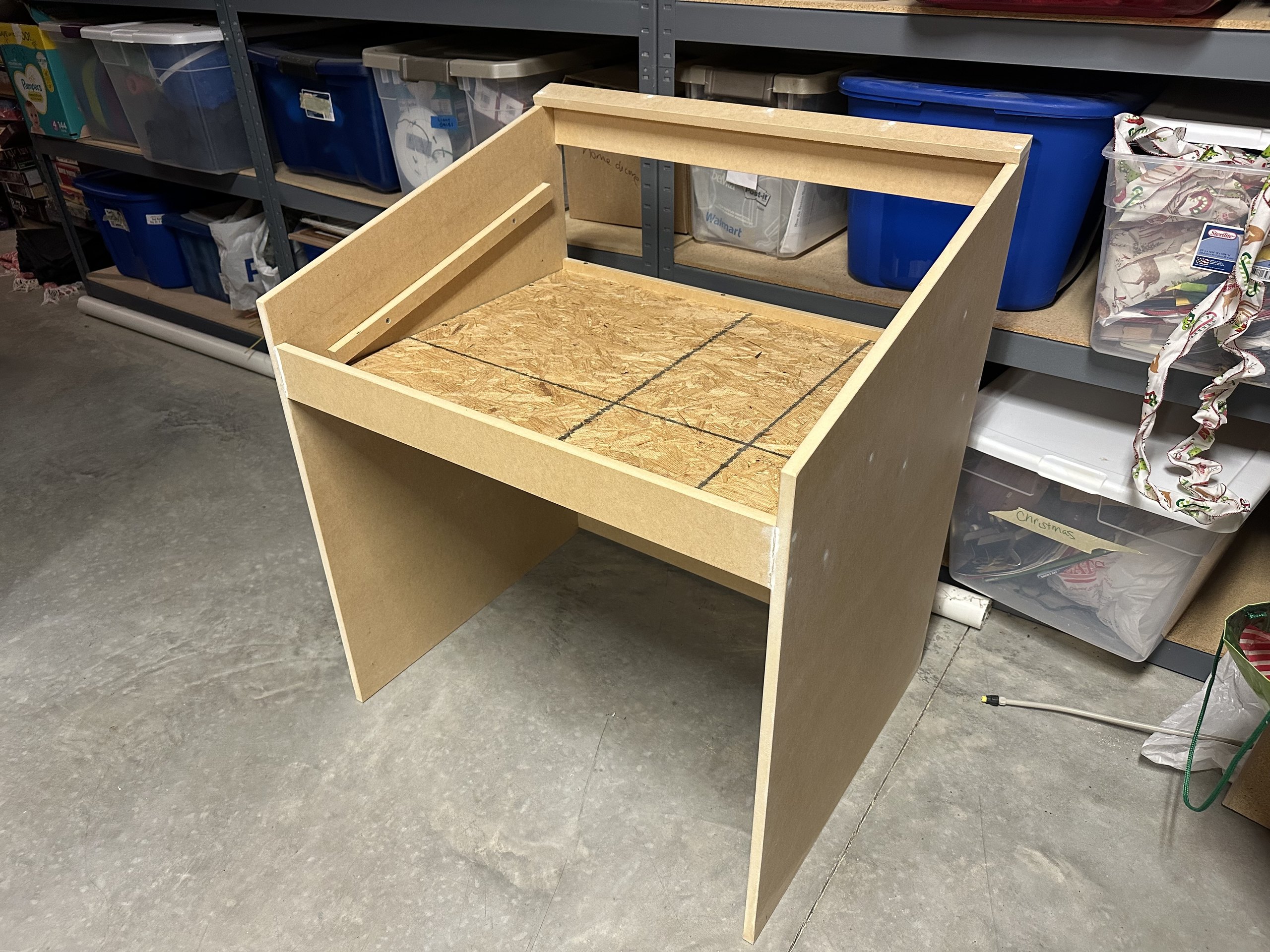
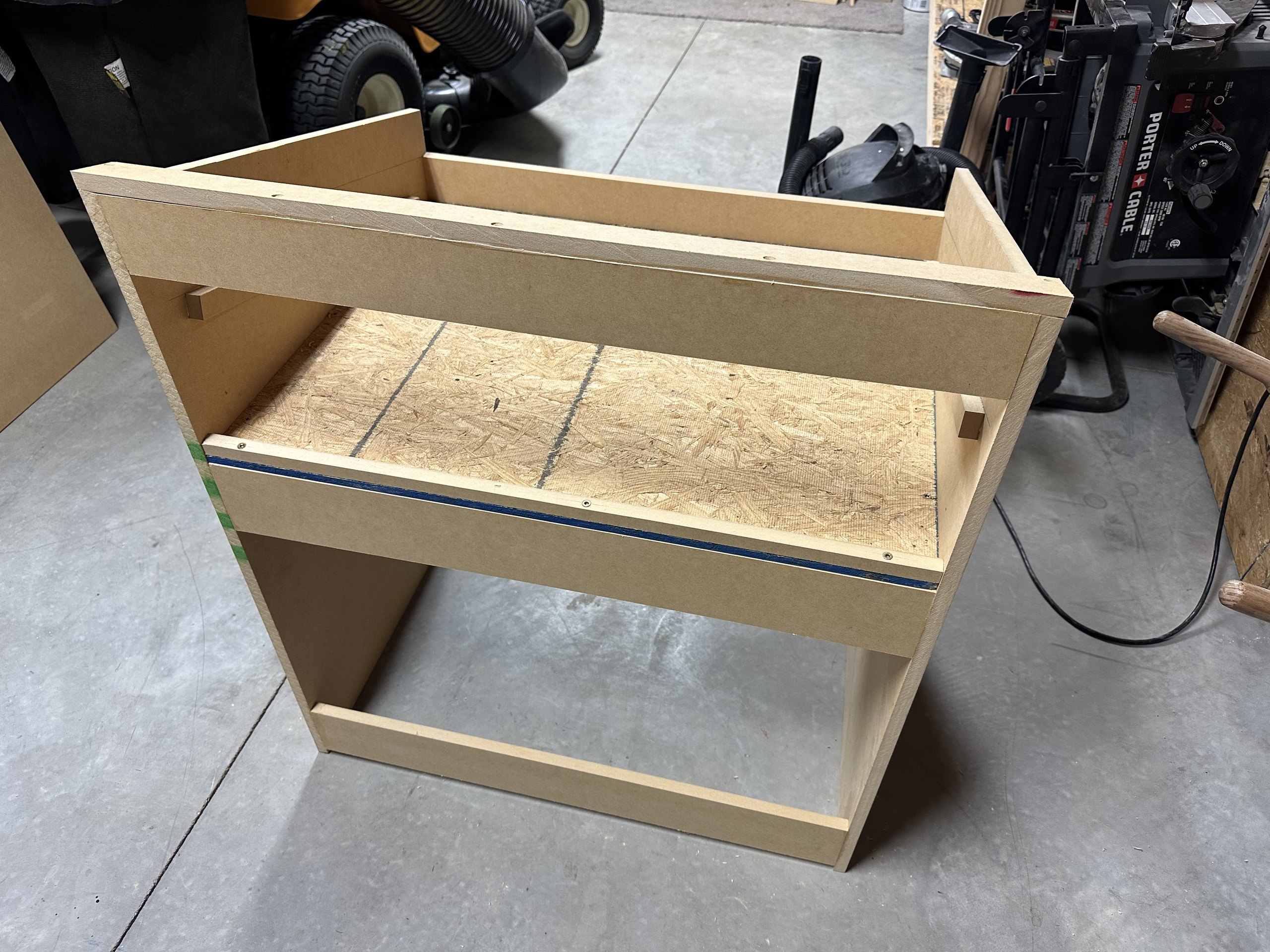
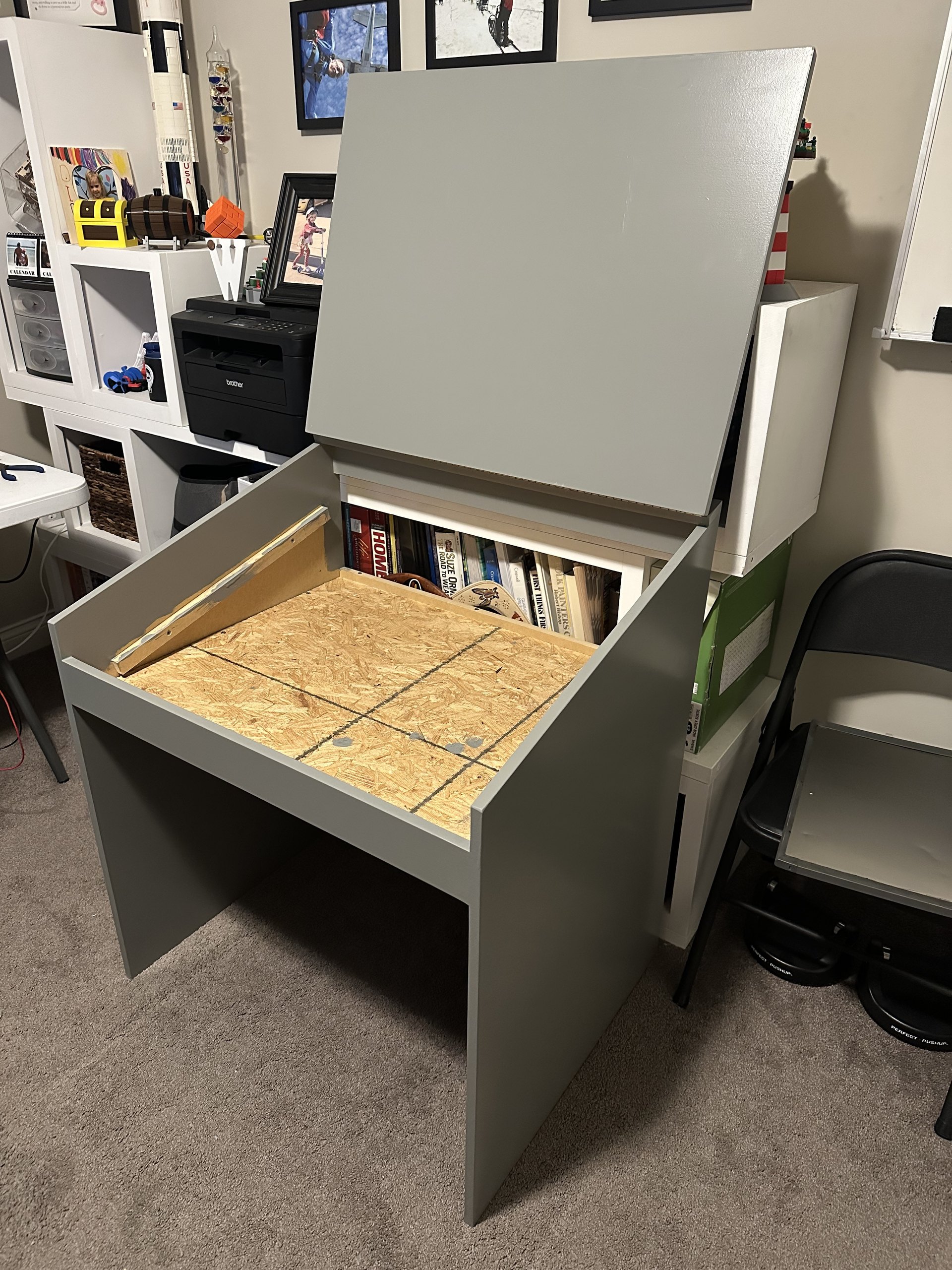
Once the design was settled, I bought the materials, cut everything to size, and assembled the frame. It’s entirely made out of 5/8″ MDF I bought from a big box store and some 3/8″ plywood I had lying around. The control panel rests directly on the slanted side supports and against the front board, so gravity holds it in place. No fasteners are needed, which makes it easy to lift out for maintenance.
Below the panel is a tray that catches all the wires hanging down from the back of the panels. It also holds the power brick and keeps the wiring protected from the kids’ knees. There’s a back lip on the tray so nothing falls out the back of the desk.
finishing touches
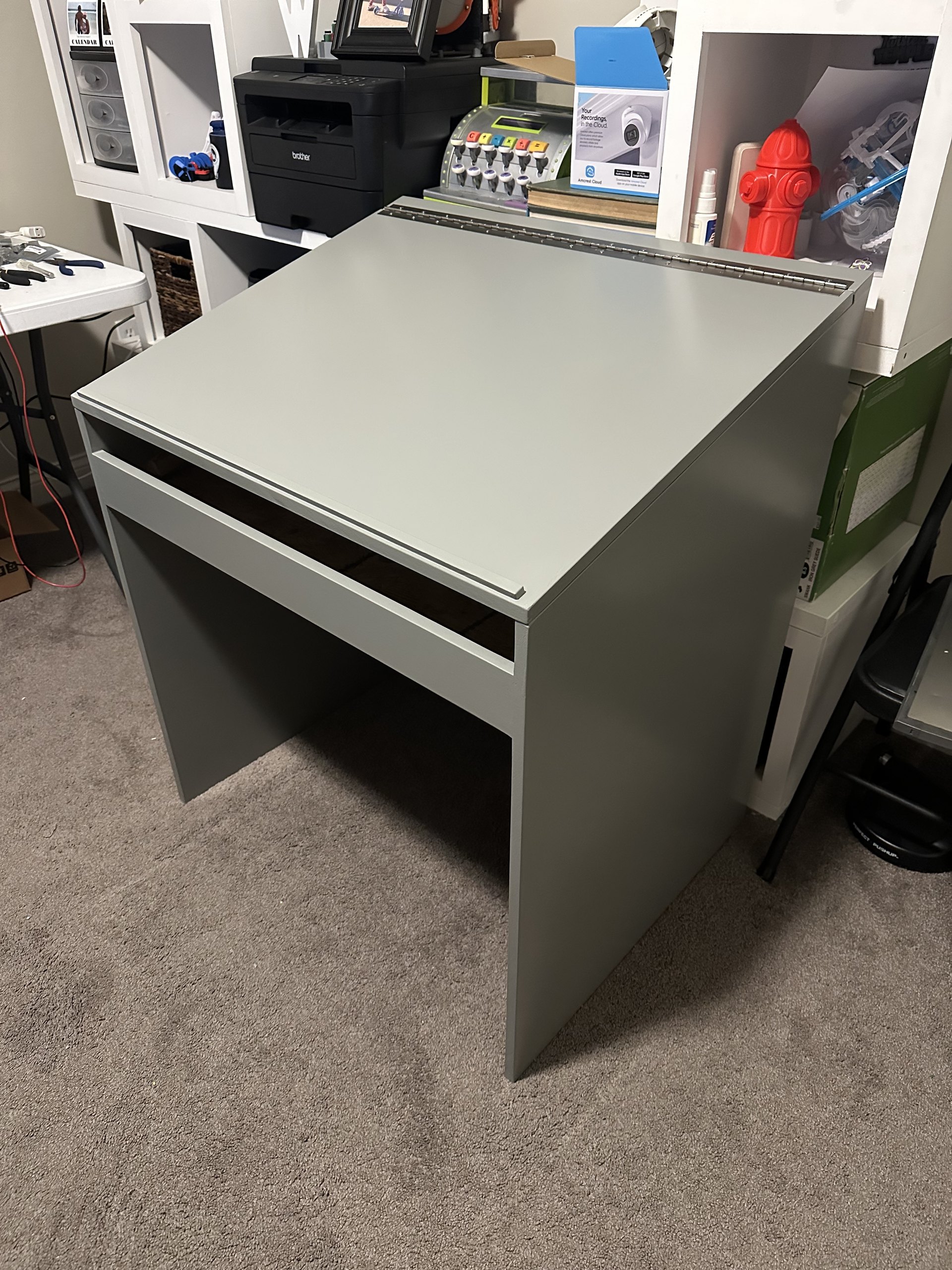
I filled all the screw holes and seams and painted everything with a gray that’s color-matched to the 3D printed panels, so the desk and console look like one piece. Then I put on a few coats of Minwax Polycrylic topcoat to protect it against future abuse.
The lid has a small lip along the front edge to hold pens and pencils when it’s being used as a regular desk. There’s a long piano hinge that allows the lid to lift up and reveal the control panel. The mission map will go on the underside of the lid, so it’s right in front of the kids during a mission. I left a gap at the back of the panel so the wires from the mission map can run down to the underside of the control panel, and they need to be flexible enough to bend each time the lid closes.


Leave a Reply